
When Normal Marital Sexual Behavior Becomes Coercion
The Consent Language That Rewrites Marital Sexual Behaviors

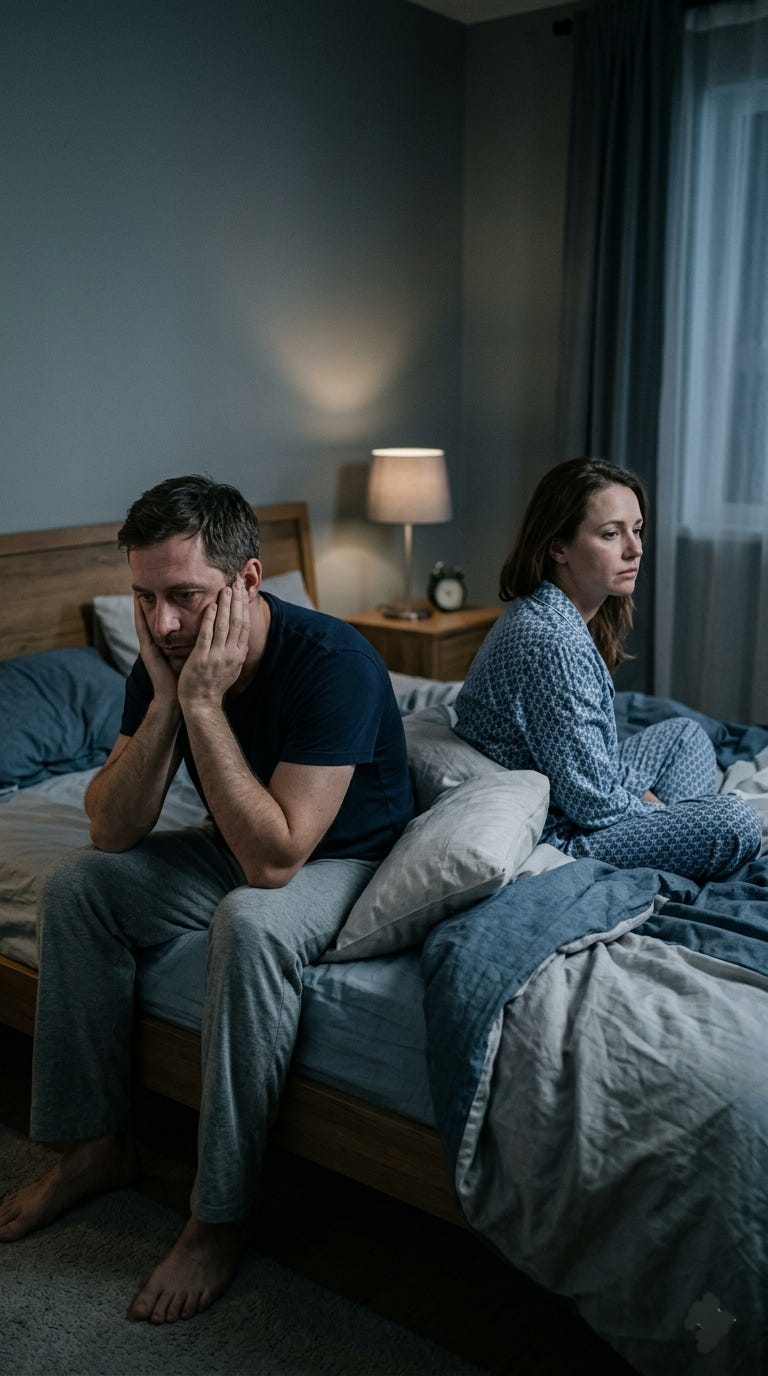
Modern relationship advice says normal marital pursuits such as initiating sex, showing frustration after rejection, providing financially, and misreading the wife’s comfort level is sexual coercion. This places the entire burden of consent management on the husband while offering no parallel standard for the wife. The result leaves husbands without a legitimate path to intimacy in their own marriages.
Key Insights:
Persistent Initiation: Initiating more than once after a no or hesitation even with no force present is coercion.
Coercion can be Emotional: A husband’s emotional response to rejection, including frustration or withdrawal, is being labeled emotional pressure.
Power Imbalance: Financial provision is being reframed as a power imbalance that invalidates a wife’s consent.
Quiet Compliance: Silence and compliance are being retroactively reclassified as coercion years after the fact.
Enthusiastic Consent: Enthusiastic consent as a standard was designed to govern male initiation exclusively and places no parallel requirement on the wife.
Sex is designed to be the bedrock of a marriage, a unique space where a husband and wife bond, procreate, and find mutual enjoyment. It is the ultimate expression of a man’s love for his wife and is biologically and psychologically vital to the health of the union. Within the bounds of monogamous marriage, sexual exclusivity means that a husband and wife are each other’s only source of sexual connection. Take sex out of a marriage long enough and the marriage begins to break down.
We are witnessing modern relationship advice where the very institution of marriage is being hollowed out from the inside. A man and a woman enter a marriage knowing that sex is a foundational duty and a primary way for the man to connect with his wife, only to find that this bond can be unilaterally withdrawn at any time. When he seeks help, he is met with a mountain of advice that prioritizes his wife’s comfort over the health of their connection, leaving him with a list of demands and no guarantee that his marriage will ever return to a state of true intimacy.
This change in marital dynamics is not accidental. It is the result of a coordinated effort by modern relationship advice to redefine the language of marital relationships. Through counseling, internet searches, and modern literature, new definitions have been embedded into our culture that seek to erase traditional masculinity and emasculate men. Wives are being taught to dictate the entire temperature of the marriage, deciding when, how, and if sex should happen at all.
The marriage institution is increasingly telling men that they should be content living in a sexless state, as if they are merely roommates with a shared mortgage. This advice does not bridge the gap between a husband and wife. Instead it pits them against each other. It creates a reality where the wife holds all the cards, and the husband is left without a voice, forced to navigate a minefield of modern advice that turns his natural desires into something shameful or predatory.
The most destructive tool in modern relationship advice is the weaponization of the term “sexual coercion.” By expanding this definition to include every human emotion and every traditional role a man plays, the advice is effectively destroying the marriage bed. If a man initiates sex and his wife says no, hesitates, or shows a lack of enthusiasm, he is accused of putting pressure on her. If he shows natural disappointment after being rejected for months or even years, he is accused of emotional pressure. Even being a good provider is now reframed as a power imbalance that makes a wife’s consent invalid, which is another form of sexual coercion.
We are told that unless there is enthusiastic consent, a standard that ignores the reality of long-term desire, the man is a violator. This practically demands that men stop initiating sex altogether. It creates a trap where the man must remain faithful and sexually exclusive, yet has no right to seek connection within his own marriage. This advice is not helping couples. It is chipping away at the very foundation of marriages and replacing sex with a regime of fear and silence.
This is what happens when modern relationship advice stops teaching husbands and wives how to enjoy their sexual bond and starts teaching husbands to fear it. The problem is not just the label. It is the way sexual coercion is now being defined inside the marriage. To see what that does to husbands, wives, and the marriage bed itself, we need to look at the definition point by point.
Persistent Pressure (Even Without Force)
If a man keeps initiating or asking for sex after his wife says no, hesitates, or shows a lack of enthusiasm, it can make her feel like if she doesn’t give in, he wouldn’t stop. It’s easier to just have sex with him than to keep saying no. Even if he thought he was just expressing desire, she may have felt worn down rather than freely choosing. This is coercion.
When a man pursues his wife, he is doing what he was designed to do, seeking connection with the one person he committed his life to. The advice treats any continued expression of desire after a wife shows hesitation or a lack of enthusiasm as pressure that wears her down. Labeling this as coercion because he asked more than once turns a husband into a solicitor.
The advice ignores that marriage is a lifelong commitment both people chose and that sexual exclusivity is part of that commitment. It suggests that a man should take a no and immediately retreat into total silence, never dare to be playful, and never show that he still finds his wife attractive. This mindset treats a husband’s persistence as a predatory tactic rather than an expression of passion or a desire to bridge the gap in a sexless marriage.
By defining persistence as coercion, the wife is given permission to view her husband’s natural drive as a nuisance. A husband who expresses desire after repeated rejection is now described as creating a situation where his wife feels she must give in to stop the pressure. This creates a dynamic where he is forced to constantly monitor his own passion as if it were a danger to the household. This definition neglects the husband’s experience entirely.
It offers no parallel rule that requires the wife to communicate why desire has disappeared or to participate in restoring intimacy. Instead it places the full burden on the husband and declares his persistence as sexual coercion no matter how gently he initiates or how long he has respected her previous refusals.
In a marriage the couple has already chosen, there is an implicit expectation of sexual availability. Otherwise the entire concept of sexual exclusivity in vows is meaningless.
This is quietly erasing sex from a man’s life by making the act of asking high-risk. The reality is that persistence is often a cry for connection in a relationship where the man feels invisible. If he asks and she hesitates, he is now a coercer in the eyes of modern psychology. To avoid this label, the husband retreats into a roommate role, where he waits in a state of perpetual passivity for his wife to initiate. Since many wives in these dynamics have already withdrawn, the result is a total cessation of sex.
I want to keep this resource free for every man who is fighting to save his marriage. If this post gave you a new perspective today, you can help me reach more men by supporting the work here.
The advice never addresses the husband who must now suppress his own biological and emotional need for sex simply because his wife has decided not to engage. It neglects the reality that both people entered the marriage with the understanding that sex would be part of their shared life. The man is left sexually exclusive to a woman he is no longer allowed to pursue, effectively rendering him celibate within his own marriage while he is told that his previous attempts at connection were actually acts of subtle aggression.
Emotional Pressure/Guilt
This is saying coercion is not always physical. It can be emotional. If a man acts distant, frustrated, or upset after his wife turns him down, or if he says things like ‘we never have sex,’ ‘you do not want me,’ or ‘sex is part of a marriage,’ these can make her feel like she owes him sex just to keep the peace or make him happy. This response is coercion.
This is a direct attack on a man’s humanity. It demands that he feels nothing when his wife rejects him. If he shows hurt, frustration, or upset after rejection, he is guilt-tripping her, and it is sexual coercion. This is designed to make him feel like his natural emotions are weapons. It is a staggering double standard that demands that a husband be an emotional robot who feels absolutely nothing when the one person he loves most turns him down. The advice treats his disappointment as a tactic designed to guilt his wife into compliance. It never acknowledges that feeling upset when sex disappears from a marriage is a human reaction, not manipulation.
The result is that the husband who voices the impact of ongoing rejection is now accused of sexual coercion while the wife faces no accountability for withholding sex without explanation. By labeling natural human sadness, or the statement of marital facts, like ‘we never have sex’ as coercion, this advice prevents a man from ever being honest about the state of his marriage. It forces him to wear a mask of constant happiness while his needs are being completely ignored.
This creates a toxic environment where the husband is responsible for his wife’s comfort but is forbidden from expressing his own pain. If he cannot feel an emotion or state that sex is part of a marriage without being accused of guilt-tripping, he loses his voice entirely. This neglects his experience of living in a sexless marriage while still being expected to provide support and stability. It offers no guidance on how he is supposed to process the rejection without ever showing its effect.
The marriage becomes a one-sided arrangement where only the wife’s feelings matter, and the husband’s disappointment is seen as a weapon rather than a legitimate response to the death of sex in the marriage. This leaves the man feeling isolated and ashamed, as he is told that his very heart is a tool of manipulation. He learns that to be a good man, he must suffer in silence and never let his wife see the toll that her withdrawal is taking on him.
He is not allowed to feel or show the natural human reaction to repeated rejection.
By defining emotional responses as coercion, sex is removed from the marriage through a process of emotional sterilization. The man realizes that the only way to avoid the coercion label is to stop caring about sex entirely. If he stops caring, he stops showing emotion. If he stops showing emotion, he stops being a husband and becomes a roommate. This advice effectively bans a husband from advocating for the health of the sexual bond in his marriage. It tells him that his desire for sex is a peace-disturbing demand rather than a bonding necessity, ensuring that the marriage bed remains empty and cold while he focuses on maintaining a fake peace that only benefits the person who has withdrawn.
Assuming Consent Instead of Checking It
Early in a marriage, if a husband assumes that being married means sex is a normal marital duty, or he initiates physically without checking his wife’s comfort level first, that is coercion. If she was not fully interested but did not feel safe or empowered enough to say no, it can make her feel like her choice did not matter. That assumption makes it coercion.
Assuming consent in a marriage is called intimacy. If a husband and wife have to sign a contract every time they touch, the marriage is already dead. When a man is told that assuming consent is coercion, he is being told that he must treat his wife like a stranger. It demands perfect reading of invisible signals while placing no duty on the wife to communicate her comfort level clearly at the time. The standard therefore places the full burden of correct interpretation on the husband. This is saying marriage does not automatically give him permission for sex, sexual touch, or sexual access. It insists that every initiation must include explicit checking of comfort levels and that any reliance on the marital bond itself is an improper assumption of consent.
A husband who initiates physically inside the relationship both spouses chose is now told he should have known better. It suggests that the years of shared life, the marriage covenant, and the established trust between a husband and wife mean nothing. In a marriage where both spouses have chosen lifelong exclusivity, that requirement ignores the practical reality of how two people who live together and share a bed actually connect. This mindset turns a simple touch, a kiss, or an embrace into a potential violation if it is not preceded by a verbal interrogation. It erases the “one flesh” reality of a marriage and replaces it with two separate entities navigating a minefield.
For the man, this means he can never truly relax in the presence of his wife. He is forced to become an obsessive observer, constantly “reading her comfort level” to ensure he is not accidentally committing a crime. This constant monitoring of his wife’s micro-expressions kills his own ability to be present and affectionate. It offers no parallel expectation that the wife will initiate or will clearly signal when she is ready. If he initiates physically and the wife does not immediately signal full enthusiasm he is held responsible for not reading her internal state.
It never explores the possibility that both people share responsibility for creating an environment where clear communication happens. Instead it treats the husband initiation as the sole source of the problem. He begins to feel that his touch is inherently unwelcome unless he has a signed and notarized “yes” for every move. This kills the spark of the relationship because intimacy cannot survive under the weight of constant scrutiny. The husband eventually decides that the effort required to check every single time is too exhausting and risky, leading to a total withdrawal of physical affection.
If every initiation requires an explicit, enthusiastic verbal yes, or the husband must walk away, then who restarts the cycle after the first no?
If every initiation requires explicit verbal confirmation before it can begin, then the husband who is expected to do the initiating faces constant risk of misinterpretation. It ignores the covenant they made to each other and treats their physical union as something that must be renegotiated from scratch every single day. This creates a sense of insecurity for the man, who no longer feels like a husband but like a guest who must constantly seek permission before touching anything in his host’s house. By making checking consent a constant requirement, this is effectively telling the husband that he has no right to his wife’s body and she has no responsibility to him. This definition therefore creates an imbalance that neglects the husband’s role in keeping the marriage sexually alive.
Power or Imbalance Dynamics
If a wife feels financially or emotionally dependent on her husband, or fears conflict, rejection, or upsetting him, it is a power imbalance. It says she may say yes to sex she did not want. Not because he forced her, but because she did not feel safe enough to say no. This says dependency is coercion.
This is a direct attack on the traditional role of the husband as a provider and protector. It suggests that if a man works hard to provide for his family, he has created a “power imbalance” that makes his wife’s consent invalid. It implies that a wife who relies on her husband is a “victim” by default because she might say yes to sex just to keep her lifestyle secure. This is an insult to a man’s hard work and a character assassination of his role as the head of the house. It tells a husband that his success and his ability to care for his family are actually weapons that he is using to force his wife into the bedroom.
If he is a good provider, or he brings majority of the income and his wife is dependent or afraid of conflict, then sex is automatically coercion. This makes the husband responsible for his wife’s internal insecurities. If she does not feel empowered to say no, that is something for her to work on, not a crime for him to answer for. It suggests that the husband who provides stability is automatically exerting pressure simply by occupying that role, that any sex that occurs under those conditions may not be fully free even when no threat is present.
A wife who relies on her husband for financial security or emotional consistency is not told that her dependence creates pressure on him to perform or provide without complaint. But a man who works double shifts to provide a better life for his family is told he is intimidating his wife into compliance. It neglects the husband’s experience of working to create the very security the marriage rests on and forces the man into a state of perpetual guilt for doing exactly what he was told a good husband should do.
He does not know if his wife truly wants him or if she is just afraid of conflict, because modern advice tells him that her feelings are his responsibility. This leaves the man feeling like a monster for simply existing as a provider, and it gives the wife a permanent excuse to invalidate every sexual encounter they have ever had as a product of dependence.
The very stability a man builds for his family makes his desire inherently suspect and unsafe for his wife.
This does not support a healthy marriage. When modern advice classifies power dynamics as sexual coercion, husbands learn that fulfilling expected roles makes them coercive. To avoid this imbalance, the husband is encouraged to step back from his masculine role, yet he is still expected to provide. She gets to enjoy the benefits of his provision while simultaneously using that provision as a reason to distance herself from him.
This erases sex in a marriage by making the husband’s role as a man a danger to his wife. It also creates a situation where he is responsible for her life but has no right to his own needs, and instead treats every imbalance as his fault. Eventually, the husband realizes that as long as he is the provider, any sex he has will be labeled coercive. To protect his character, he stops seeking intimacy entirely, choosing to live as a roommate rather than a husband who expects a mutual, physical bond with his wife. The result is a standard that discourages provision and leadership rather than encouraging couples to address real imbalances through honest adult conversation.
Silence or Freeze Response
Not everyone says no clearly. Some people shut down, go quiet, or simply comply. If that happens in a marriage, the husband may have interpreted his wife’s silence as consent, but internally she may have felt stuck or pressured. This silence is coercion.
This is the most absurd. The advice says that if the wife shuts down, goes quiet, or simply complies, the husband should have known it was not real consent. It turns a yes into a no after the fact. A husband can only act on what is communicated. In long-term relationships, married couples develop patterns of non-verbal signals. This advice says that the husband must interpret every silence as a hidden no and that he is responsible for detecting internal states he cannot see.
This is an impossible standard because it makes him responsible for the words his wife never spoke. It tells him that he cannot trust his wife’s consent and that he is a coercer for not sensing an unspoken no. This turns every memory of intimacy into a potential crime, as his wife can retroactively decide years later that she was actually frozen during a time he thought they were bonding.
If a husband cannot rely on his wife’s verbal consent or her compliance, he has no ground to stand on. He is forced to wonder if every time he made love to his wife, she was secretly trapped or pressured. This doubt could destroy his confidence and his sense of self-worth. He begins to see himself through her eyes as a potential predator, even when he is being loving and affectionate. The advice never asks why the wife chose silence instead of a clear verbal no or physical withdrawal.
It never considers that passive compliance may be a pattern she has allowed to continue rather than a sign of immediate distress. It offers no guidance on how married couples are supposed to signal desire or refusal. Instead it converts the wife’s choice to remain silent or change her mind after the fact into the husband’s failure and labels his actions sexual coercion. This leaves husbands without any reliable way to know when participation is genuine.
In a marriage, silence is not automatically a scream of trauma. Adults in long-term relationships have a thousand non-verbal ways of communicating yes or no.
If silence or regret after the fact can be rebranded as coercion, a husband would not want to ever initiate again. He would stop touching his wife because he does not want to accidentally freeze her. Even when she says yes, he would not trust it because he has been told that yes might actually mean no. The result is a marriage where the man stays as far away from the wife as possible to ensure he is never accused of misinterpreting her silence, or doing something she may later regret after consenting to it.
It erases sex from a marriage by making the act of intimacy a terrifying risk for the husband. It makes him live in a state of total sexual isolation to protect himself from a retroactive accusation of coercion. She can retroactively invalidate any moment of their marriage, leaving the husband with no defense and no way to ever feel truly connected or safe with her again.
Different Understandings of Consent
Many men were not taught what enthusiastic consent looks like. A husband may assume that because his wife did not say no, she was okay with it, but she may have felt like she could not say no. And assumption of the wife’s silence is coercion.
This is the ultimate moving goalpost because it claims that even when the wife says yes, it might not actually be a yes. This demands enthusiastic consent for every single sexual act between a husband and his wife. It says men were not taught enthusiastic consent, which is why they assumed silence meant yes. It also says because the wife did not say no is not good enough and that anything less than a clear, enthusiastic performance of desire is a sign of coercion.
This ignores the reality of a marriage, where desire is often a slow build and intimacy is a quiet, steady part of life. By labeling a wife’s internal inability to say no as the husband’s sexual coercion, this advice removes all responsibility from the wife to communicate and places the entire burden of her psychological state on her husband’s shoulders.
The advice treats the husband’s understanding of consent as ignorance and the wife’s unspoken feelings as fact. The advice states that if the wife later said she did not feel she could say no then every past encounter becomes coercive regardless of the context. The only way for a man to protect himself from this is to never initiate at all. It forces him to wait for his wife to provide a certified level of enthusiasm before he dares to touch her. Even when she says yes, he is still at risk of being accused of coercion.
Most couples who married before enthusiastic consent became the standard in modern relationship advice, assumed that marriage included regular physical intimacy and that silence or compliance usually meant acceptance. The advice neglects the husband’s experience of participating in the relationship both people accepted at the time. It offers no mechanism for mutual reflection or shared learning. Instead it allows one spouse to retroactively reframe every intimate moment as coercive while erasing the good-faith actions of the other. It tells the husband that his natural, consistent desire for his wife is predatory if she is not meeting him with equal intensity at that exact moment. This therefore converts past marital sex into sexual coercion years later.
Every past sexual encounter can be retroactively reclassified as coercion years later, no matter how much love, affection, and post-sex cuddling the husband provided.
This destroys any possibility of trust in a marriage. When modern advice classifies different understandings of consent as sexual coercion, husbands learn that no sexual history is safe from later reinterpretation. It ignores the reality that in many marriages, the husband leads and the wife follows. By labeling this normal dynamic as a different understanding of consent, it empowers the wife to redefine their entire physical and sexual history as a series of violations, and leaves the husband with no ground to stand on, forcing him to accept a life of total distance. This is how sex is quietly erased from a marriage by making the consent process so complicated and risky that it is easier to just stop having sex.
You Cannot Apologize Your Way Back to Intimacy
You are told sex belongs in a marriage, only to find that a marriage no longer protects sex as a real part of the marriage. You are then told to accept that quietly, manage yourself carefully, and never let the deprivation show in ways that make your wife uncomfortable. Modern relationship advice has made normal marital sexuality morally dangerous for husbands while still holding them to exclusivity. What happens when a marriage still demands sexual exclusivity from you, but the advice treats your desire, your hurt, and your initiation as a threat?
The advice is not about helping marriages. It is a barrier that stops couples from enjoying marriage the way it was made to be. The goal of true relationship guidance should never be to pick a side or to arm one spouse with weapons to use against the other. When advice acts as a wedge, it only deepens the divide and ensures that you and your wife end up lonely, even while sharing the same bed. If you find yourself in a situation where your past attempts at connection with your wife are being rebranded as coercion, you must realize that you cannot apologize your way back to intimacy. Accepting a false label does not bridge the gap. It only confirms the distance.
This advice leaves you especially in a sexless marriage with all the moral exposure and almost no protection. You must not ask too much. You must not feel too much. You must not show too much disappointment. You must not misread. You must not assume. You must not persist. You must not withdraw. But you are still in a sexually exclusive marriage. It is saying “a man who decides to get married, should require nothing of his wife, and should just be happy.” It tells you that your role as a provider makes you a predator. If you ask for sex, you are exploiting your wife. If you do not ask, you are neglecting her. It devalues the entire concept of a husband being a provider and protector by turning those virtues into dynamics of abuse.
It is a way to make you feel guilty for the very things you were told would make you a good husband. It assumes that saying yes is not an act of love or partnership, but a calculated move for your wife to keep her housing and food secure. It ignores the possibility that she actually wants to be with you and to enjoy a sexual relationship that the marriage bed provides. Withholding sex because she feels emotionally unsafe has a name in therapy, a boundary. Withholding sex until you do more chores has a name in popular culture, fair negotiation. Neither of those have terms that get weaponized against women the way terms get weaponized against men.
The advice takes the normal, messy, emotional give-and-take of a marriage and turns it into a list of crimes. What is a marriage asking a man to commit to if the sexual bond is no longer protected as a real part of marriage? If you work hard to ensure your wife does not have to worry about bills, that very security is rebranded as a power imbalance. The message is that because she relies on you, she is incapable of giving real consent. It tells you that the more you provide, the more coercive your mere existence becomes. It implies that a wife in a traditional marriage is a victim by default because she is not the primary breadwinner. It never examines whether the wife has a responsibility to build her own sense of safety or to address the dependence openly.
This one-sided advice harms both spouses in different ways. The husband feels confused and erased when his good-faith efforts to love and connect are reclassified as coercion and when his natural reactions to repeated rejection receive no validation. The wife may feel unheard if her discomfort was never openly addressed, yet she also loses the opportunity for connection when the conversation stays locked in accusation rather than mutual understanding. Without balanced accountability, the advice blocks the honest dialogue both people need to rebuild trust, safety, and desire. It deepens the divide instead of helping the couple create a sexual relationship that truly works for both of them over the long term.
What has your experience been with this? Join the conversation.
Past Publications Worth Reading
What Sexless Marriage Does to A Man
The Double Standard That is Destroying Marriage
Reading helps you see the problem. Coaching helps you deal with the real situation. I work with men in sexless marriages who want a clear way forward. I offer 1:1 coaching. If you want direct help, send me a direct message.
This is the most amazing entry I have seen on this site.
I read the “reddit feminist stories” on YouTube and everything they display is addressed in this article.
That it is written by a woman (assumption) is stunning.
Thank you so much for this. You absolutely rock.
I wanted to mash on the ‘like’ button like a crazed weasel on cocaine, but alas, they allow only once. Tis a shame.
I subscribed so hard I required a nap. :-D
Nothing about being pleasant and attractive. Many such cases. Sad.